The Conversation
| Total Responses: | 5 |
| Average Quality Score: | 81.2 |
| Average Bias Score: | 3.2 |
| gen: 2026/08/07:16:37 in 1 min 5.4 secbias: 3 (Center) |
| type: eli5quality: 75 |
| pts: 0 |
 | author: | Unknown | institution: | The Conversation | ¿porque no los dos? |
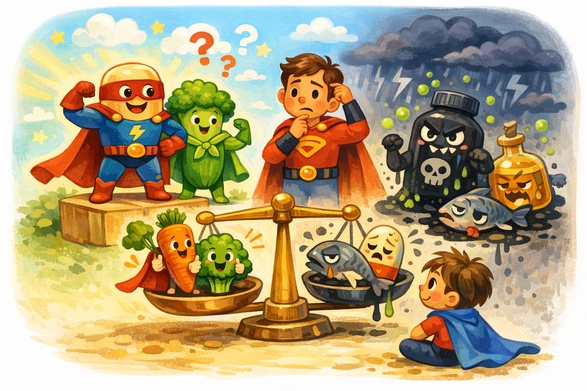
| tl;dr | The image shows a The Conversation-style explainer about the dietary supplement citicoline and claims it may help with brain-related conditions (memory/cognition/neurological injury), outlining what it is, how it might work, what current treatments are, and what evidence/trials exist. The article appears to emphasize potential benefits while noting uncertainty and the need for more rigorous clinical testing. | ||||
| deeper: | The tone is largely explanatory and science/health-oriented, with moderate optimism about citicoline’s potential. Bias risk comes from framing a “supplement” as a promising intervention before definitive trial results and from selective emphasis on mechanisms/early findings. Quality is fairly strong for a general audience: structured sections, cautious language about evidence, and discussion of trials/limitations. It’s not top-tier because the screenshot doesn’t show strong sourcing detail (study sizes, effect sizes, conflicts) or clear separation between established evidence and hypotheses. | ||||
media: | |||||
| gen: 2026/07/23:02:35 in 1 min 15.9 sec (old)bias: 4 (Center) |
| type: newsquality: 78 |
| pts: 0 |

#cryptocurrency#canada#crime#regulation#laundering#crypto#bitcoin#moneylaundering#fintrac#intelligence
 | author: | Unknown | institution: | The Conversation | ¿porque no los dos? |
| tl;dr | The article reports that Canadian intelligence/financial-crime reporting flagged certain “crypto-to-cash” (often storefront or kiosk/ATM-based) services as knowingly enabling money laundering, citing a document. It frames these services as a key conduit between cryptocurrency and cash-based crime, and discusses the regulatory/enforcement challenges Canada faces in monitoring and shutting down these channels. | ||||
| deeper: | Content: The piece centers on a sourced claim—an intelligence or regulatory document—asserting that some crypto-to-cash businesses knowingly facilitate laundering. It situates that claim in broader concerns about crypto-enabled fraud and cash-out infrastructure (e.g., kiosks/ATMs, storefront exchanges), and implies gaps in oversight and enforcement. Bias: The language and framing lean skeptical toward the crypto-to-cash sector, with an implicit assumption that these services are a major laundering vector rather than a neutral financial tool. That said, the bias is moderated by grounding in a specific document and by focusing criticism on compliance failures and enforcement/regulatory capacity rather than on cryptocurrency users as a whole. Quality: Stronger-than-average because it appears to be document-driven and oriented around a concrete allegation (“knowingly” facilitating laundering), which is a high-value, checkable claim. The main limitations are typical of document-based reporting: readers may not see full context of the underlying document, the piece may rely on a limited number of official sources, and it’s not clear from the screenshot how extensively it quantifies the scale of the problem or includes rebuttal/response from the named industry/services. Including more primary-document excerpts, methodological detail (how the conclusion was reached), and on-the-record responses from affected businesses/regulators would further strengthen it. | ||||
media: | |||||
| gen: 2026/07/18:04:34 in 1 min 14.1 secbias: 6 (Center-Left) |
| type: eli5quality: 78 |
| pts: 0 |

 | author: | Unknown | institution: | The Conversation | ¿porque no los dos? |
| tl;dr | The article argues that the Trump administration’s 2019 rules weakening the Endangered Species Act (ESA) are unlikely to survive court challenges. It explains how the rules: remove default protections for newly listed “threatened” species, narrow the definition and reach of “take,” make it easier to consider economic impacts, limit how climate change and future habitat are weighed, and constrain critical habitat designations. The authors contend these moves conflict with the ESA’s text and Supreme Court precedents (e.g., TVA v. Hill and Sweet Home), and therefore are vulnerable under the Administrative Procedure Act. They predict injunctions and eventual reversals in federal court. | ||||
| deeper: | Content: Substantive, law-focused analysis of the 2019 ESA rule changes. It clearly describes several provisions (Section 4(d) default protections, economic considerations, critical habitat limits, climate-change-related forecasting) and connects them to statutory text and key precedents like TVA v. Hill (snail darter) and Babbitt v. Sweet Home. That legal grounding raises quality. Evidence: cites concrete rule changes and established case law, explaining why each could be struck down as arbitrary or contrary to the statute. However, it offers little space to the administration’s legal rationale beyond brief paraphrase, and the headline’s verb “gut” signals an advocacy stance. Tone: consistently critical of the rules and predictive about litigation outcomes; still, the arguments are reasoned and not conspiratorial. Overall: high informational value with moderate partisan tilt toward stronger environmental protections. | ||||
media: | |||||
| gen: 2024/11/10:16:09 in 30.5 sec (old)bias: 1 (Center) |
| type: newsquality: 85 |
| pts: 0 |

 | author: | Benjamin Scellier | institution: | The Conversation | ¿porque no los dos? |
| tl;dr | The article explains a universal principle in brain coordination, discovered through research spanning from fruit flies to monkeys. It discusses how neurons regulate activity for efficient processing, responding to new information, and adapting to changes. | ||||
| deeper: | The article is scientific, presenting findings from neuroscience research without political or cultural bias. The language is objective and backed by research evidence, thus scoring low on bias. It is well-structured and informative, supporting a high quality score. However, it could include more detailed data and references. | ||||
| gen: 2024/09/23:18:07 in 1 min 4.5 secbias: 2 (Center) |
| type: eli5quality: 90 |
| pts: 0 |
 | author: | Aravind Vijayaraghavan | institution: | The Conversation | ¿porque no los dos? |
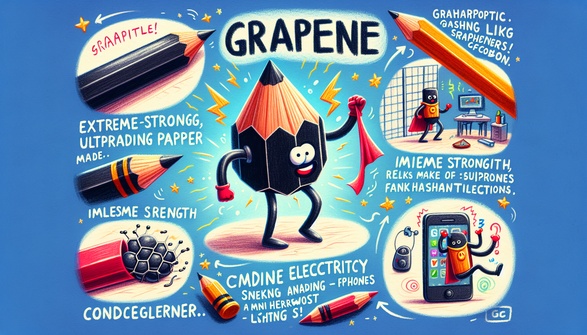
| tl;dr | The article discusses the impact and applications of graphene, a versatile material, 20 years after its first isolation. It highlights how graphene has quietly revolutionized various industries, despite its initial overhyped promises such as a space elevator. The material's unique properties make it useful in high-performance sports, electronics, manufacturing, and biomedical devices. | ||||
| deeper: | The article is based on scientific advancements and factual applications of graphene, avoiding hype and focusing on measured, evidence-based analysis. There is minimal bias, as the article is rooted in scientific discussion rather than political opinions. The quality is high due to thorough research, expertise, and a balanced perspective on graphene's real-world impact. | ||||
media: | |||||
You made it to the bottom. Now dance!


owned and operated by: RPN Omnigalactic Insitutution as of: 2026/10/15: 09:53 in 0 ms
Enter Code
Login with Account